

Trump administration starts building border wall project in Arizona over tribe’s objections
Advertisement
Read this article for free:
or
Already have an account? Log in here »
To continue reading, please subscribe:

Digital Subscription
One year of digital access for only $205*
- Enjoy unlimited reading on winnipegfreepress.com
- Read the E-Edition, our digital replica newspaper
- Access News Break, our award-winning app
- Play interactive puzzles
*First annual payment billed as $205.00 + GST for one year. This annual subscription will automatically renew at $233.00 + GST every 52 weeks (10% off the regular annual price of $259.35). Offer available to new and qualified returning subscribers only. Cancel any time.
To continue reading, please subscribe:
Add Free Press access to your Brandon Sun subscription for only an additional
$1 for the first 4 weeks*
- Enjoy unlimited reading on winnipegfreepress.com
- Read the E-Edition, our digital replica newspaper
- Access News Break, our award-winning app
- Play interactive puzzles
*Your next Brandon Sun subscription payment will increase by $1.00 and you will be charged $17.95 plus GST for four weeks. After four weeks, your payment will increase to $24.95 plus GST every four weeks.
Read unlimited articles for free today:
or
Already have an account? Log in here »
PHOENIX (AP) — The Trump administration has begun work on a project to build a stretch of border wall in southern Arizona along part of a Native American tribe’s reservation, pushing ahead with one of its signature projects despite protests from the tribe.
U.S. Customs and Border Protection says the area is a dangerous smuggling route and that building the wall will close a longstanding security gap. But members of the Tohono O’odham Nation, whose membership spans both sides of the U.S.-Mexico border, have accused the administration of trespassing and say the construction will damage land sacred to the tribe.
The wall segment is part of a $46 billion effort by the Trump administration to fill the border with 30-foot (9-meter) steel bollard walls, vehicle barriers, and technology designed to stop undocumented immigration and smuggling.
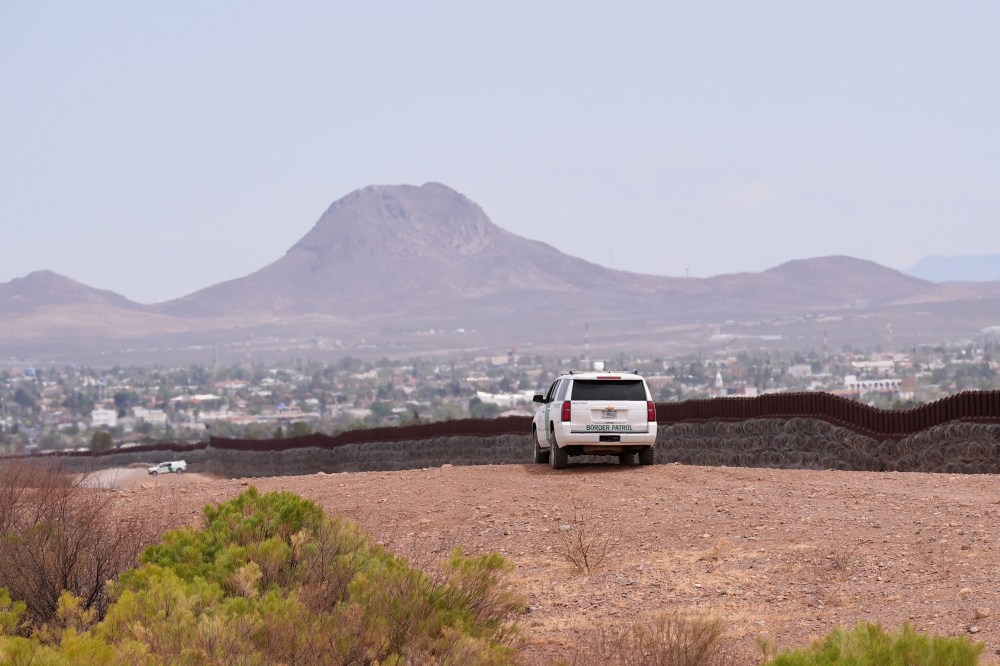
But as building efforts have ramped up, the administration has run into opposition from landowners, environmental groups, and Native American tribes who say construction is violating property rights and desecrating sacred Indigenous sites.
The Tohono O’odham Nation said in a statement Tuesday that about 20 Customs and Border Protection officers, working with contractors, went onto the tribe’s land early that morning to begin construction.
Drone videos published by nation officials show roughly 14 vehicles and an industrial drill at one of the sites.
A federal judge permitted the government to move forward with construction earlier this month, but the tribe says the contractors are violating tribal codes and trespassing to access the border wall site.
The Tohono O’odham Nation, which has 37,000 members including thousands who live in Mexico, sued the federal government in June in an attempt to block construction of the border wall. The tribe argued that the wall would cause “significant devastation” on the reservation, including the destruction of mountain peaks sacred to the tribe, and would alter boundaries of their nation.
US District Judge Richard Leon in Washington, D.C., an appointee of former President George W. Bush, ruled in favor of the government, noting that the border wall would be built on a 60-foot (18-meter) wide buffer zone of federally owned land called the Roosevelt Reservation.
“Defendants have not yet articulated plans to construct outside the Roosevelt Reservation,” the judge wrote in his opinion.
The Tohono O’odham Nation said that even if construction were contained to the Roosevelt Reservation, driving onto tribal land to access the area still constitutes trespassing.
“The contractors, who are on the Nation illegally, were accompanied by agents as they worked on three separate locations near the border with drill trucks to conduct soil sampling and other activities,” tribal officials said in a statement.
The CBP agents were masked, armed, and set up a vehicle blockade to stop tribal police from removing the contractors, according to Tohono O’odham officials. The nation had set up “No Trespassing” signs before Tuesday.
So far, no physical confrontations between police or members of the Tohono O’odham Nation have been reported.
CBP defended the need for the wall in a statement Tuesday, saying the desert spanning the Tohono O’odham Nation is a corridor for drug smuggling.
“The project will close one of the most dangerous smuggling and trafficking corridors on the Southwest border: remote desert that has facilitated decades of drug loads, migrant deaths, and cartel activity,” said CBP Commissioner Rodney Scott.
Tribal officials said they’re exploring further legal actions in an effort to remove contractors.
SLSCO Ltd., the Texas-based construction company building the section in Arizona, has secured over $390 million in funding from the Department of Homeland Security to build the border wall since 2023.