

Colombian president orders immigration raids, vows deportations of migrants without legal status
Advertisement
Read this article for free:
or
Already have an account? Log in here »
To continue reading, please subscribe:

Digital Subscription
One year of digital access for only $205*
- Enjoy unlimited reading on winnipegfreepress.com
- Read the E-Edition, our digital replica newspaper
- Access News Break, our award-winning app
- Play interactive puzzles
*First annual payment billed as $205.00 + GST for one year. This annual subscription will automatically renew at $233.00 + GST every 52 weeks (10% off the regular annual price of $259.35). Offer available to new and qualified returning subscribers only. Cancel any time.
To continue reading, please subscribe:
Add Free Press access to your Brandon Sun subscription for only an additional
$1 for the first 4 weeks*
- Enjoy unlimited reading on winnipegfreepress.com
- Read the E-Edition, our digital replica newspaper
- Access News Break, our award-winning app
- Play interactive puzzles
*Your next Brandon Sun subscription payment will increase by $1.00 and you will be charged $17.95 plus GST for four weeks. After four weeks, your payment will increase to $24.95 plus GST every four weeks.
Read unlimited articles for free today:
or
Already have an account? Log in here »
BOGOTA, Colombia (AP) — Colombian President Abelardo de la Espriella has promised to deport thousands of migrants who are in the country without residence permits, mainly Venezuelans, as he attempts to make significant changes to the nation’s immigration policies that he says will reduce crime.
De la Espriella, who was sworn into office three weeks ago, said that he would order the country’s national immigration service to conduct raids with Colombian police as early as this week. He announced the new policy in a video released on Sunday night in his X account where he spoke of multiple measures to reduce crime and confront criminal groups.
The ultra conservative leader, who is closely aligned with the U.S. President Donald Trump, said that law enforcement will first target migrants who are “committing crimes” and then, those who are living in the country without regular status.
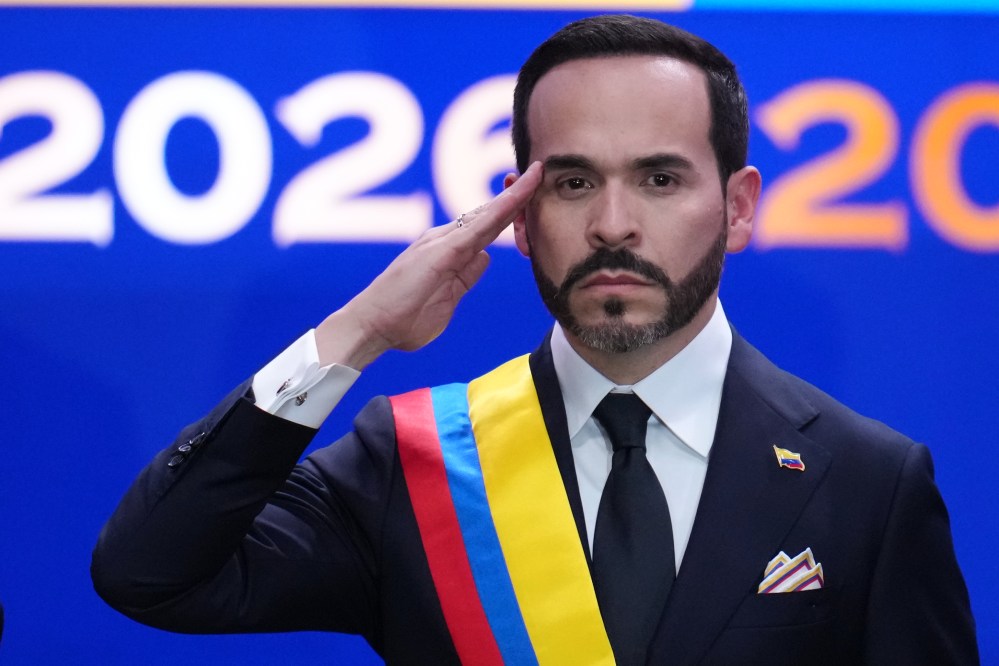
“I will not accept any illegal immigrants, wherever they come from,” de la Espriella said in the video. “They will have to leave and be deported. It is a political decision I am taking responsibility for.”
Most migrants living in Colombia come from neighboring Venezuela, a nation that lost about a fifth of its population over the past decade as Venezuelans fled a repressive regime that oversaw years of economic turmoil, and a 75% contraction in the nation’s GDP.
Around 2.8 million Venezuelans were living in Colombia as of August, according to the United Nations, making it the largest Venezuelan diaspora. In July, Colombia’s national immigration service said that it had granted temporary residence permits to about 2.3 million Venezuelans under a scheme rolled out in 2021 by then President Ivan Duque during the peak of Venezuela’s immigration crisis.
De la Espriella’s effort to deport migrants who have no regular status marks a major shift for Colombia, which had long worked to protect incoming Venezuelans and grant them a pathway towards permanent residency.
Ana Karina García, director of Juntos Se Puede, an organization that helps Venezuelan migrants in Colombia, said that the Colombian government stopped handing out new temporary residency permits three years ago. She said that de la Espriella’s incoming administration should expand pathways to legal residency, instead of punishing people who cannot obtain residency permits.
“We understand that the president wants to protect Colombians,” she said. “But there is no need to protect them from migrants. It has been proven that foreigners do not commit crimes at greater rates” than the local population.
Arles Pereda, the president of an association that represents Venezuelans in Bogota, said the announcement worried him, because new groups of Venezuelans displaced by the twin earthquakes that rocked the country in June have been arriving in Colombia to seek opportunities.
“The doors seem to be closing,” Pereda said. “Not just in Colombia, but also in Chile, Peru and Ecuador,” where conservative leaders have also made it harder for Venezuelan migrants to get residency permits.
In a text message, Colombia’s national immigration department, Migracion Colombia, said that the agency is currently without a director. The agency said it will only implement the new policies outlined by Colombia’s incoming government once a new director is appointed and installed. ___
Follow AP’s Latin America coverage at https://apnews.com/hub/latin-america