

A federal judge lets DHS proceed with a border wall through a small Texas town’s levee system
Advertisement
Read this article for free:
or
Already have an account? Log in here »
To continue reading, please subscribe:

Digital Subscription
One year of digital access for only $205*
- Enjoy unlimited reading on winnipegfreepress.com
- Read the E-Edition, our digital replica newspaper
- Access News Break, our award-winning app
- Play interactive puzzles
*First annual payment billed as $205.00 + GST for one year. This annual subscription will automatically renew at $233.00 + GST every 52 weeks (10% off the regular annual price of $259.35). Offer available to new and qualified returning subscribers only. Cancel any time.
To continue reading, please subscribe:
Add Free Press access to your Brandon Sun subscription for only an additional
$1 for the first 4 weeks*
- Enjoy unlimited reading on winnipegfreepress.com
- Read the E-Edition, our digital replica newspaper
- Access News Break, our award-winning app
- Play interactive puzzles
*Your next Brandon Sun subscription payment will increase by $1.00 and you will be charged $17.95 plus GST for four weeks. After four weeks, your payment will increase to $24.95 plus GST every four weeks.
Read unlimited articles for free today:
or
Already have an account? Log in here »
WASHINGTON (AP) — A federal judge is allowing the Department of Homeland Security to go ahead for now with plans to build a border wall through a levee system protecting a small Texas town on the border with Mexico, rejecting arguments by the town that the wall could lead to flooding.
The decision late Sunday marks a victory for the Trump administration as it races ahead with efforts to build a $46 billion wall along the U.S.-Mexico border from the Pacific Ocean to the Gulf of Mexico.
The town of Presidio, with a population of about 3,200 people, argued the wall could cause flooding and that the administration isn’t following the law as it rushes forward with its plans. The town’s development district sued earlier this year to stop the department from going forward with construction.
But the judge said in his ruling Sunday that they were unlikely to succeed on the merits of the case.
“For the foregoing reasons, despite the understandable concerns expressed by the plaintiff regarding the harms it and the plaintiff’s residents might sustain by the potential construction of the Smart Wall, the Court is compelled to deny the plaintiff’s motion for a stay,” wrote Judge Reggie B. Walton.
DHS has been charging forward with its wall-building plan with senior administration officials saying a first layer of the structure will be done by next year. In its push, the Secretary of Homeland Security has waived numerous regulations designed to protect the environment, wildlife, archaeological and Native American sites.
But the department has been running into opposition by landowners, environmental groups, Native American tribes and others who argue that the government’s rapid construction endangers environmental and religious sites and a way of life along the border. Opponents also question the urgency to finish the wall when migrant crossings from Mexico are already at extreme lows.
Lawyers for Presidio’s development district argued in a court hearing that the government’s plans could compromise the levee system protecting the town from flash flooding and that the government flouted a key act that requires it to seek permission from the Army Corps of Engineers before building on or near the levees.
“We are very disappointed that the court will allow this potentially disastrous construction to continue, but we remain committed to protecting the Big Bend area and those who rely on the threatened levees,” said the town’s development district in a statement Monday.
Presidio is protected by a series of berms and levees built in the 1970s and 1980s along the Rio Grande and tributaries to combat flooding.
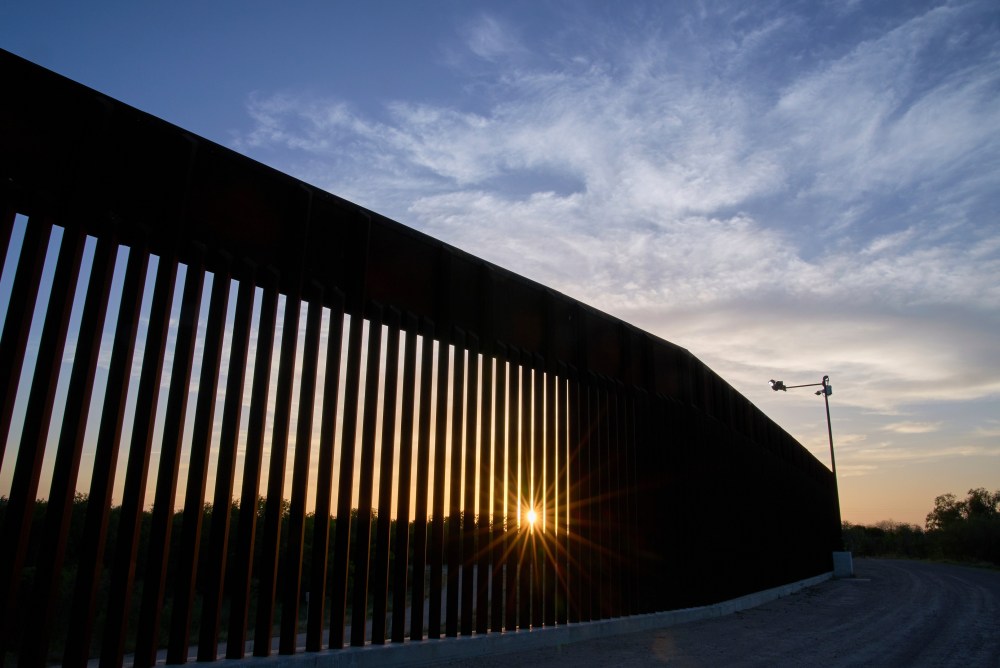
In court documents, Presidio’s development district said Customs and Border Protection plans to “replace the earthen slope of the existing levee with a concrete wall, with 30-foot steel bollard panels installed on top.” The district said it asked the agency for more details but was told they can’t be shared due to “national security.”
The government has argued that there is no final plan for where the border wall will go or how it will be built. And the administration has maintained that it has the authority given to it by Congress to waive a vast swath of regulations to build the wall as it seeks to get the number of people crossing the border every day to zero.
In his ruling, the judge bolstered that argument, saying that it was clear “that Congress did not intend to limit the Secretary of DHS’s waiver authority.”
The government is also facing another lawsuit in Texas where an environmental group and a church preservation group have teamed up to oppose DHS’s plans.