Stalked? Scared? Sorry Winnipeg women left to navigate criminal justice system on their own for nearly a month until stranger harassing them arrested
Read this article for free:
or
Already have an account? Log in here »
To continue reading, please subscribe:

Digital Subscription
One year of digital access for only $205*
- Enjoy unlimited reading on winnipegfreepress.com
- Read the E-Edition, our digital replica newspaper
- Access News Break, our award-winning app
- Play interactive puzzles
*First annual payment billed as $205.00 + GST for one year. This annual subscription will automatically renew at $233.00 + GST every 52 weeks (10% off the regular annual price of $259.35). Offer available to new and qualified returning subscribers only. Cancel any time.
To continue reading, please subscribe:
Add Free Press access to your Brandon Sun subscription for only an additional
$1 for the first 4 weeks*
- Enjoy unlimited reading on winnipegfreepress.com
- Read the E-Edition, our digital replica newspaper
- Access News Break, our award-winning app
- Play interactive puzzles
*Your next Brandon Sun subscription payment will increase by $1.00 and you will be charged $17.95 plus GST for four weeks. After four weeks, your payment will increase to $24.95 plus GST every four weeks.
Read unlimited articles for free today:
or
Already have an account? Log in here »
When Emma met Anthony Edward Liwyj, he was banging on her front door in bare feet and with two black eyes, pleading for a drink of water.
The 36-year-old Winnipeg woman didn’t know it then, but her willingness to help a stranger the morning of Aug. 4 would mark the beginning of a month of terror, in which she says Liwyj repeatedly turned up outside the home late at night or in the early morning hours — trying to get in.
“To this day, I still can’t figure it out and I think that’s the scariest part about it,” Emma said, speaking from the duplex in Osborne Village she shares with her 66-year-old mother.
“This was an absolute stranger to me. We had no prior connection, no acquaintances in common, nothing that would have made our paths cross ever in life before… I had no idea who this person was, what he was capable of or how far he would go.”
RUTH BONNEVILLE / FREE PRESS “It became very apparent very quickly that if I wanted to be safe and be protected, that was my job. That was our responsibility,” Emma said.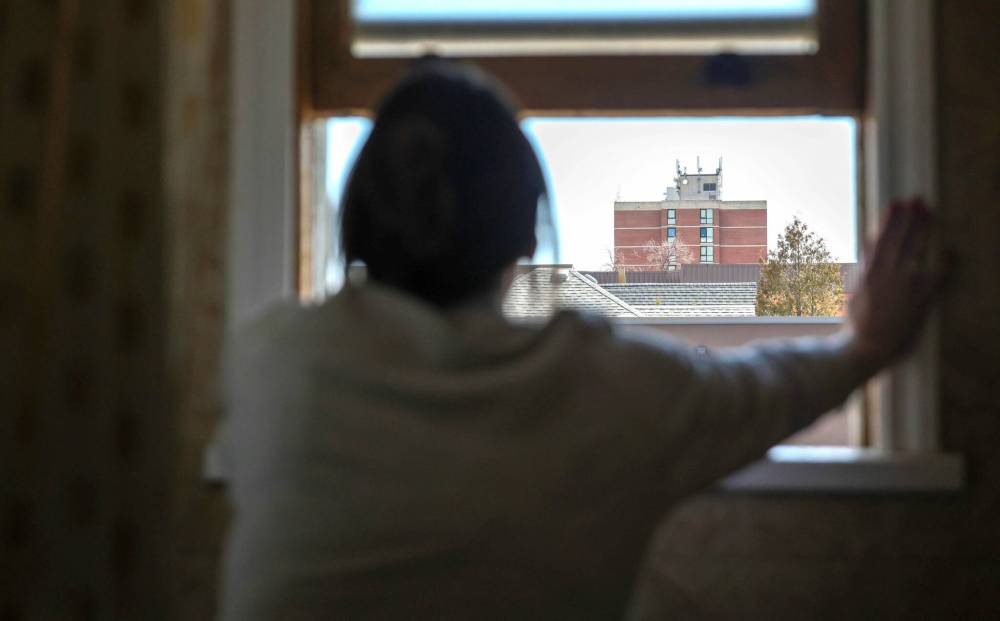
Emma, who asked to withhold her last name, described scrambling to secure a protection order, contact police and document the numerous instances in which she says Liwyj appeared at her home and workplace before he was arrested.
Her story represents the reality for many women in Canada, who find themselves isolated and vulnerable as they navigate a justice system poorly equipped to support stalking victims and treat offenders.
While Canada’s Criminal Code recognizes stalking as an offence, referring to it as criminal harassment, experts say resources and information about the crime are limited, and women often find their concerns minimized or dismissed — sometimes with violent consequences.
“It is a profound issue. Canada has one of the worst responses to stalking of any country in the western world in terms of resources,” said Julie Lalonde, the founder and executive director of the Canadian Anti-Stalking Association.
“There’s this huge gap in awareness about stalking… People don’t know where to turn, and they don’t know who to call.”
Manitoba does have some support in place to help women access protection orders, navigate the court process and access counselling, but such programs are mostly catered to victims of domestic violence, agreed Tsungai Muvingi Van Landeghem, provincial co-ordinator for the Manitoba Association of Women’s Shelters.
“I had no idea who this person was, what he was capable of or how far he would go.”
“If someone is being stalked by… a stranger… they don’t often neatly fit into those specific systems, so what we then see is survivors are left piecing together support on their own; calling police, seeking legal protection, documenting evidence.”
Van Landeghem stressed the impact of stalking on victims can be “quite intense” and it is a known risk factor for more serious forms of violence.
“Stalking is often misunderstood as just harassment, but it is actually a form of ongoing psychological violence. Victims live in a constant state of fear, they are hyper vigilant,” she said. “When we minimize it, we’re missing an opportunity to intervene before things escalate.”
Throughout August, Emma said she reported at least eight interactions with Liwyj to police, including an instance in which he was caught on a neighbour’s surveillance camera peering into the duplex’s windows. On another occasion he set up a temporary encampment in her backyard and spent hours lounging in a lawn chair, refusing to leave.
“It became very apparent very quickly that if I wanted to be safe and be protected, that was my job. That was our responsibility,” she said.
“It was exhausting, to be honest. All the documentation, all the calls, being on edge, looking over my shoulder, having to write down incident numbers, calling the police, waiting for police.”
“There’s this huge gap in awareness about stalking…. People don’t know where to turn, and they don’t know who to call.”
Liwyj, 59, would ultimately be arrested and held in custody on Aug. 28 for violating a protection order Emma sought against him on Aug. 7. By that time, he had already been warned by police to stay away, and was arrested and released for breaching the order just days before.
He was denied bail last September and remained in custody until a hearing on March 17, when he admitted to disobeying a court order and failing to comply with a non-contact order imposed during his previous release. Several other charges were stayed in exchange for his guilty plea, including one of criminal harassment.
The plea deal meant the Manitoba courts would never hear the full extent of what Emma described as a targeted campaign to terrorize her and her mother.
Instead, the proceedings focused primarily on just two instances in which Liwyj admitted to knowingly defying court orders.
Lalonde said it is not uncommon for stalking charges to be pleaded down to lesser or alternative offences, such as trespassing or breaching court orders, because they are easier to prove in court.
Data from the Winnipeg Police Service’s 2024 annual statistical report shows officers logged 92 cases of criminal harassment that year. However, only a fraction of those ever appeared before a judge.
“They (correctional facilities) are really, for the most part, overcrowded places where people basically end up being warehoused.”
Statistics Canada figures indicate Manitoba courts rendered decisions in just 24 stalking cases that year, resulting in nine convictions. In more than half of the cases — 15 — charges were stayed or withdrawn.
It’s part of a larger trend that plays out in courts across the country.
In 2023 and 2024, Canadian courts rendered decisions on 3,110 charges of criminal harassment. Of those, just 1,273 (41 per cent) resulted in a guilty conviction. Meanwhile, 1,738 (55 per cent) were stayed or withdrawn, Statistics Canada data shows.
University of Manitoba associate law professor Brandon Trask said a conviction of criminal harassment carries a maximum sentence of 10 years in custody and is considered a serious offence. However, the cases often involve complicated factors for the courts to consider.
“Our criminal justice system involves so many people with complicated backgrounds as far as mental-health considerations, addictions issues… and so, this is one of the reasons why it’s not always the right answer to throw the book at an individual,” he said.
“You do need to balance the different goals of sentencing, including trying to allow for rehabilitation. It’s a very tough balance.”

During the March hearing, Judge Sidney Lerner sentenced Liwyj to approximately six months in custody and two years of supervised probation.
Accounting for his time already served in custody, Liwyj was released that day.
Court heard Liwyj is a former member of the Canadian Armed Forces, who suffers from hearing loss as a result of his duties. Few other biographical details were available because he had no previous criminal record in Manitoba.
Defence lawyer Gregory Sacks said his client was homeless for several years, but was reluctant to access supports from shelter services in Winnipeg.
“His homelessness has had an impact on him,” Sacks said. “It’s unfortunate that Mr. Liwyj, after having served the country in that fashion, finds himself in a situation where he’s not able to really support himself.”
Lerner said it is unclear what motivated Liwyj’s behaviour.
“I don’t know precisely what happened here – I don’t know that we will ever know.”
“I don’t know precisely what happened here — I don’t know that we will ever know,” Lerner said. “This seems to have come out of nowhere except for the fact that Mr. Liwyj has been unhoused for a number of years, which can suggest some other issues.”
Liwyj was given the opportunity to speak at the end of the sentencing hearing, after Crown prosecutor Patrick Benjamin read victim impact statements written by Emma and her mother into the court record.
He said he did not realize he was causing the women such distress.
“After hearing the victim statements, I seriously think that she should probably seek help on her own because I’ve never been that much of a threat to her in any way,” he said.
Liwyj did not undergo a mental-health assessment ahead of his sentencing, and the court did not order him to participate in any mandatory treatment or counselling, unless recommended by his probation officer.
Emma said she disagreed with that decision.
RUTH BONNEVILLE / FREE PRESS On one occasion Anthony Edward Liwyj set up a temporary encampment in Emma's backyard and spent hours lounging in a lawn chair, refusing to leave.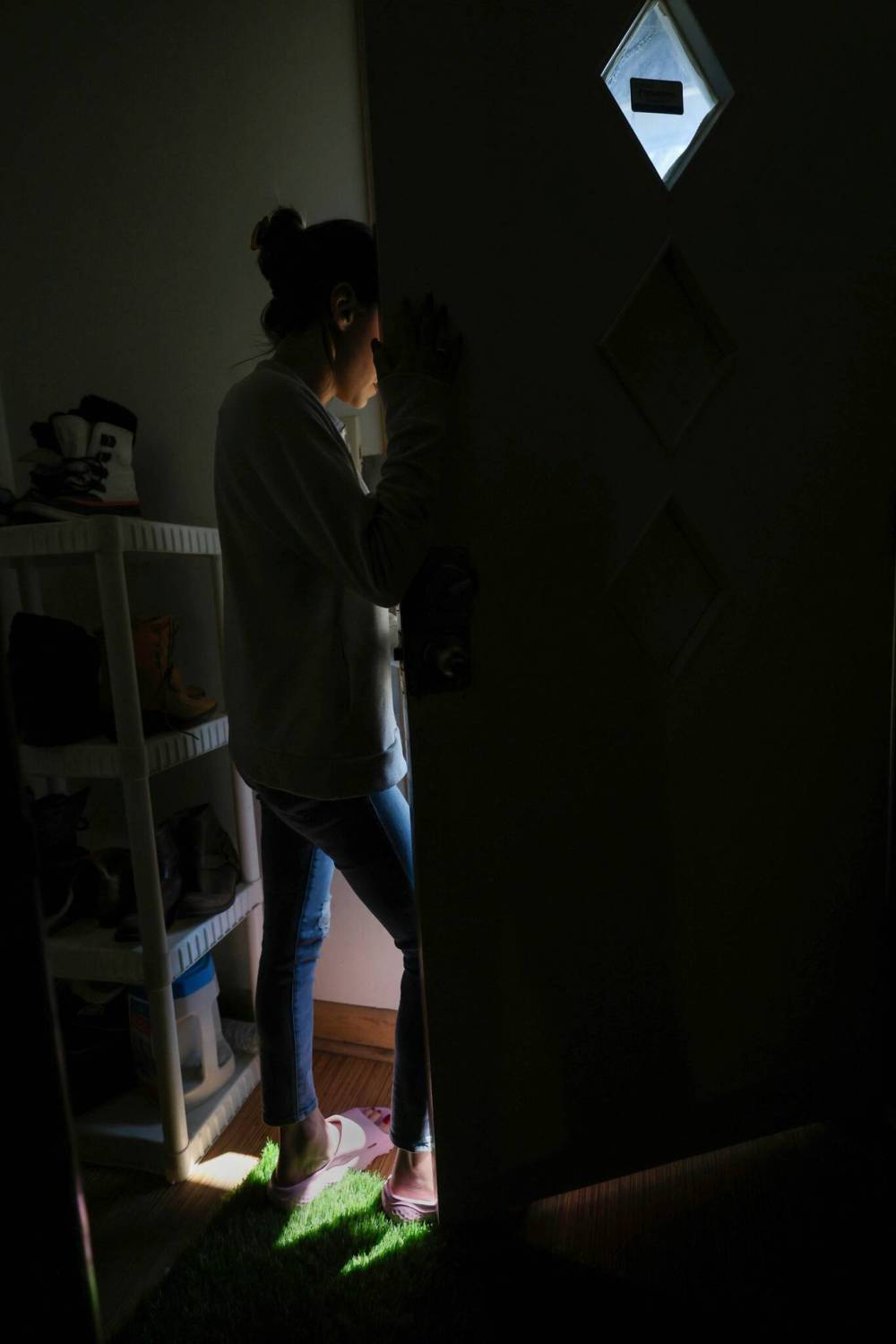
“What I wanted is for this person to have a psychological assessment,” she said.
“Wouldn’t it make sense to get him a psych assessment, get him on some proper medications or get a diagnosis and get to the root of whatever issue is actually going on to prevent it from happening again?”
Frank Cormier, a criminologist and University of Manitoba professor, said it’s not so simple.
“The problem with being on remand is that, generally, you don’t get any services while you’re in there,” Cormier said.
“In some cases, being found guilty and sentenced to custody can be better because then you are eligible for the various rehabilitative services that you can get through a correctional institution.”
Cormier stressed the psychology and motivations of a person accused of criminal harassment can be difficult to nail down — particularly in the rare cases where they have no known connection to the apparent target of their fascination.
Trask agreed that a major shortcoming in Manitoba’s justice system is the lack of mental-health supports available to people in custody.
“Correctional facilities are, sadly, not really places that most people go to and get better. They are really, for the most part, overcrowded places where people basically end up being warehoused,” he said.
“We need to realize that investing in mental-health supports and services for folks in custody is actually an investment in society.”
As a condition of his supervised probation, the courts imposed an order barring Liwyj from entering the Osborne Village area.
That condition is in place to keep him at least 300 metres away from Emma’s workplace, but the boundary was reduced to just 200 metres from her home because Liwyj has a close friend living in an apartment tower two blocks away.
Emma said she feels unsafe knowing Liwyj is permitted to remain nearby, noting, “We can literally see the building from our front yard.”
Neither she nor her mother has seen Liwyj in the weeks since he was released. While they are hopeful he will abide by his conditions, their experience has left a lasting feeling of unease, she said.
tyler.searle@freepress.mb.ca

Tyler Searle is a multimedia producer who writes for the Free Press’s city desk. A graduate of Red River College Polytechnic’s creative communications program, he wrote for the Stonewall Teulon Tribune, Selkirk Record and Express Weekly News before joining the paper in 2022. Read more about Tyler.
Every piece of reporting Tyler produces is reviewed by an editing team before it is posted online or published in print — part of the Free Press‘s tradition, since 1872, of producing reliable independent journalism. Read more about Free Press’s history and mandate, and learn how our newsroom operates.
Our newsroom depends on a growing audience of readers to power our journalism. If you are not a paid reader, please consider becoming a subscriber.
Our newsroom depends on its audience of readers to power our journalism. Thank you for your support.