Consumer apprehension grows as US retailers adopt AI-assisted pricing tools
Advertisement
Read this article for free:
or
Already have an account? Log in here »
To continue reading, please subscribe:
Digital Subscription
One year of digital access for only $1.44 a week*
- Enjoy unlimited reading on winnipegfreepress.com
- Read the E-Edition, our digital replica newspaper
- Access News Break, our award-winning app
- Play interactive puzzles
*Billed as $5.77 plus GST every four weeks. After 52 weeks, price increases to the regular rate of $19.95 plus GST every four weeks. Offer available to new and qualified returning subscribers only. Cancel any time.
To continue reading, please subscribe:
Add Free Press access to your Brandon Sun subscription for only an additional
$1 for the first 4 weeks*
- Enjoy unlimited reading on winnipegfreepress.com
- Read the E-Edition, our digital replica newspaper
- Access News Break, our award-winning app
- Play interactive puzzles
*Your next Brandon Sun subscription payment will increase by $1.00 and you will be charged $17.95 plus GST for four weeks. After four weeks, your payment will increase to $24.95 plus GST every four weeks.
Read unlimited articles for free today:
or
Already have an account? Log in here »
U.S. consumers aren’t just frustrated with high prices. They’re angry and confused about the increasingly high-tech ways that restaurant chains and major retailers are setting those prices.
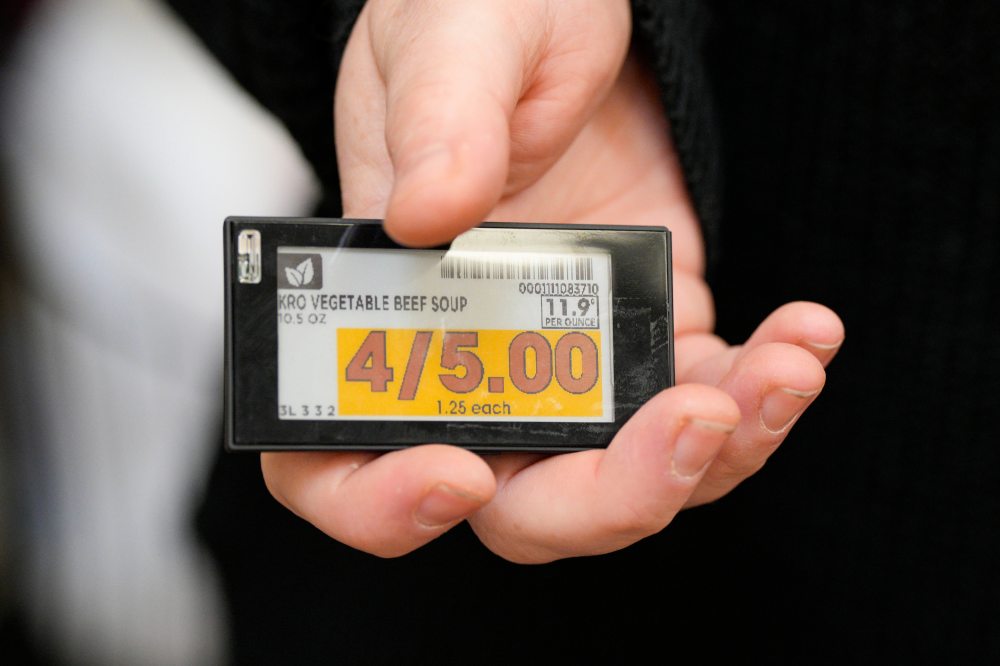
Digital price tags are rapidly replacing paper ones in grocery aisles. Artificial intelligence tools help businesses decide what to charge by predicting how customers might respond. Terms like “dynamic pricing” and “surveillance pricing” are stirring anxiety on social media, where users wonder if different people are getting different prices for the same product.
Americans have grown accustomed to changing prices when booking flights, hotel rooms and rides, but the prospect of everyday spending shaped by algorithms they don’t understand and personal data they may not realize they’re sharing has touched a nerve.
“There are major tensions happening right now between who’s really going to have the power with some of these algorithms and usage of bots and AI: the companies or the shopper,” said Katie Thomas, who leads an internal consumer behavior think tank at the management consulting firm Kearney.
Companies using the technology say some concerns stem from misconceptions about how their pricing tools work. Walmart CEO John Furner said in a blog post last month that digital price tags save workers’ time and keep prices up to date. He said the labels aren’t used to raise prices based on the weather, time of day or individual shopper.
“We price the product, not the person,” Furner wrote.
But companies aren’t always transparent about the customer data they collect and how it’s used, which has made consumers suspicious and led to speculation. For example, social media posts falsely imply that electronic shelf labels Walmart plans to put in all its U.S. stores scan shoppers’ faces or cellphones to set individualized prices, Thomas said.
Lawmakers and regulators are taking action. Legislators in at least 30 states have considered pricing bills this year, including measures addressing algorithmic and personalized pricing, according to the National Conference of State Legislatures.
The Federal Trade Commission has proposed an enforcement policy warning businesses that failing to disclose their use of personal data to set individualized prices could violate consumer protection law.
Here are some of the pricing practices and technologies drawing scrutiny.
Dynamic pricing can raise and lower prices
What it is: Dynamic pricing means adjusting prices in response to changing market conditions, including supply and demand. An airline that adjusts ticket prices as departures approach is using dynamic pricing. Uber’s practice of lifting fares when demand outstrips the supply of available drivers, such as during rush hour, is a type of dynamic pricing known as surge pricing.
Why it matters: Frequent price changes extend well beyond food. Decodo, a web data company, tracked price changes in 2025 across products ranging from electronics to clothing and home improvement supplies. About half the U.S. changes it recorded were decreases, contrary to consumers’ assumptions that dynamic pricing only raises prices, said Gabriele Vitke, a senior product marketing manager.
Digital price labels are coming to more US stores
What they are: Digital displays that let stores update shelf prices electronically instead of replacing paper tags.
Why it matters: Digital price labels, long used in Europe and Asia, are drawing more attention as they spread to major U.S. retailers like Walmart and Whole Foods. Consumer advocates have argued that digital labels could eventually be used for surge pricing or personalized pricing. Labor unions also have opposed the technology.
The electronic shelf labels make frequent changes easier but don’t necessarily lead to higher prices during periods of strong demand. Retailers typically update electronic shelf prices on a regular schedule, often weekly, because shoppers value consistency, said Asa Farquhar of Relex Solutions, a retail technology company. Researchers who tracked prices at an unnamed grocery chain found “virtually no surge pricing” after the labels were introduced.
“Changing prices throughout the day, the way airlines or rideshare apps do, is exceedingly rare in grocery and general merchandise today,” Farquhar said.
Personalized pricing, also called surveillance pricing, draws on customer data
What it is: Personalized pricing means offering customers different prices and discounts based on their locations, incomes, web-browsing habits and other information about individuals or groups of shoppers. Some advocacy groups and regulators use the term “surveillance pricing” for the same practice.
Why it matters: It’s unclear how widely businesses use personal information to customize prices. An FTC staff report released in January 2025 found that intermediaries offering tools that can tailor prices and promotions worked with at least 250 clients, including grocery and clothing retailers.
Lawmakers in Maryland, New Jersey and Connecticut recently enacted restrictions on using shoppers’ personal data to determine what they pay. The Maryland and New Jersey laws focus on groceries, with exceptions for certain loyalty discounts and other promotional offers. Connecticut’s legislation covers a broader range of retail purchases.
California prosecutors sued Target in 2022, alleging that the retailer’s app displayed lower prices before shoppers entered stores and raised them once they were inside.
Target agreed to a $5 million settlement and a ban on using so-called geofencing technology to increase prices.
Target said the app functionality at issue was used to “provide guests with accurate pricing, which can vary across stores and channels.” The retailer said it didn’t personalize prices based on a guest’s data or behavior and remains “committed to clear, transparent pricing.”
Different prices do not necessarily mean personal data was used. Last year, an investigation by Consumer Reports, Groundwork Collaborative and More Perfect Union found that shoppers on Instacart were shown different prices for identical products at the same stores. Instacart subsequently ended what it described as tests that randomly assigned shoppers to groups rather than setting prices based on their personal information.
Algorithmic pricing gets an assist from AI
What it is: Algorithmic pricing uses software to recommend or automatically set prices. Companies have used such systems for decades. AI can help the software identify patterns in sales, competitors’ prices and other information to predict demand and estimate how different prices would affect sales and profits. These tools can support both dynamic and personalized pricing.
Why it matters: It’s unclear how widely retailers use AI to help set prices, but research suggests businesses across industries are adopting it.
Simon-Kucher, a global consulting company, surveyed more than 2,200 business leaders in 28 countries and 39 industries last year, and 41% said they used AI software to gather market intelligence, including competitors’ prices. Another 28% said they used it for “real-time price optimization.” Price optimization means choosing prices that advance business goals, such as increasing profits, attracting shoppers or clearing unsold goods.
The National Retail Federation, which represents big and small stores, said algorithmic pricing is a new method of doing what retailers have always done: monitor and adjust prices depending on supply, demand, seasonality, competitors’ prices and other factors.

Some lawsuits have alleged companies used pricing algorithms to undermine competition.
A 2023 anti-monopoly lawsuit the FTC brought against Amazon challenged, among other practices, an algorithmic tool codenamed Project Nessie. The agency alleged Amazon used the tool to identify products whose prices it could raise with competitors likely to follow, generating more than $1 billion in excess profits.
A trial is scheduled for next year. Amazon said the FTC allegations “grossly mischaracterize” the pricing tool.
Project Nessie was intended to stop retail price-matching practices from creating unsustainably low prices, the e-commerce giant said. Amazon said it tested the tool for a few years but it didn’t work as intended and was scrapped before the federal agency’s lawsuit.
A recent consumer lawsuit against McDonald’s alleged that its pricing system use nonpublic sales data from competing locations to coordinate prices. The Chicago-based burger giant said the lawsuit was “filled with inaccuracies” and that the company makes the tool available to U.S. franchisees to help them set prices at their individual restaurants.