Scientists studying cockroach milk and nose-blowing win Ig Nobel prizes for quirky science
Advertisement
Read this article for free:
or
Already have an account? Log in here »
To continue reading, please subscribe:
Digital Subscription
One year of digital access for only $1.44 a week*
- Enjoy unlimited reading on winnipegfreepress.com
- Read the E-Edition, our digital replica newspaper
- Access News Break, our award-winning app
- Play interactive puzzles
*Billed as $5.77 plus GST every four weeks. After 52 weeks, price increases to the regular rate of $19.95 plus GST every four weeks. Offer available to new and qualified returning subscribers only. Cancel any time.
To continue reading, please subscribe:
Add Free Press access to your Brandon Sun subscription for only an additional
$1 for the first 4 weeks*
- Enjoy unlimited reading on winnipegfreepress.com
- Read the E-Edition, our digital replica newspaper
- Access News Break, our award-winning app
- Play interactive puzzles
*Your next Brandon Sun subscription payment will increase by $1.00 and you will be charged $17.95 plus GST for four weeks. After four weeks, your payment will increase to $24.95 plus GST every four weeks.
Read unlimited articles for free today:
or
Already have an account? Log in here »
Ten research teams were honored last week at a satirical science awards ceremony that was hosted outside the U.S. for the first time due to travel concerns.
Researchers who studied milk from cockroaches and analyzed soil health using underwear received Ig Nobel prizes celebrating unusual and imaginative contributions to science.
The awards organized by a digital magazine called the Annals of Improbable Research shifted to Europe after 35 years in the United States over concerns about attendees being able to get visas.
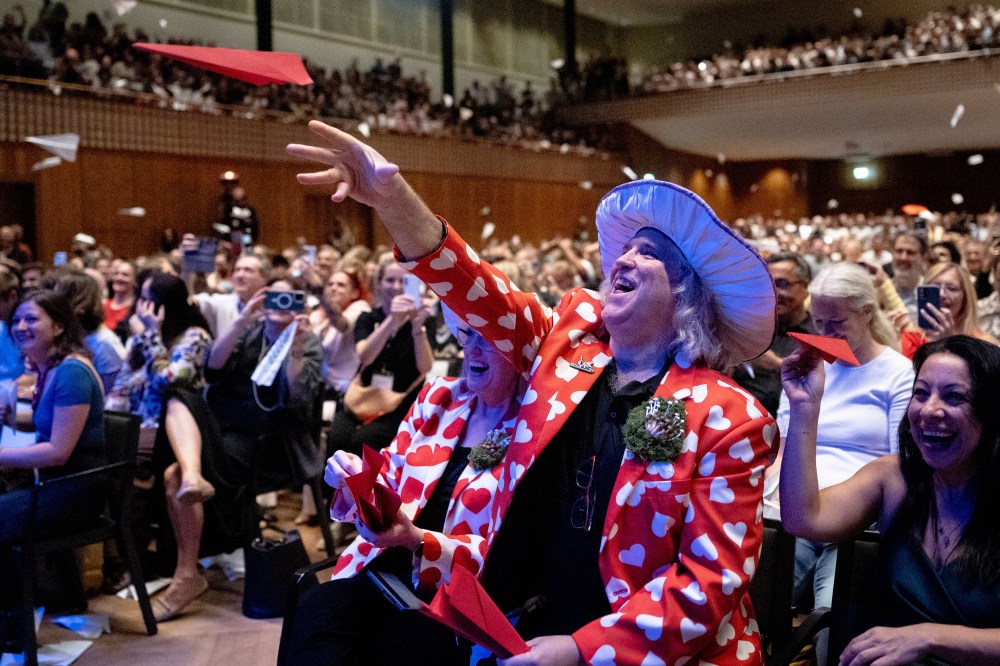
At a convention center in Zurich, Switzerland, research teams received a custom trophy resembling a cross between a mushroom and a human foot. Among them were Matilda Brindle and Stuart West from the University of Oxford and the Florida Institute of Technology’s Catherine F. Talbot, who reconstructed the evolutionary history of kissing, and the late Dr. Tokuji Unno who investigated the science of blowing one’s nose.
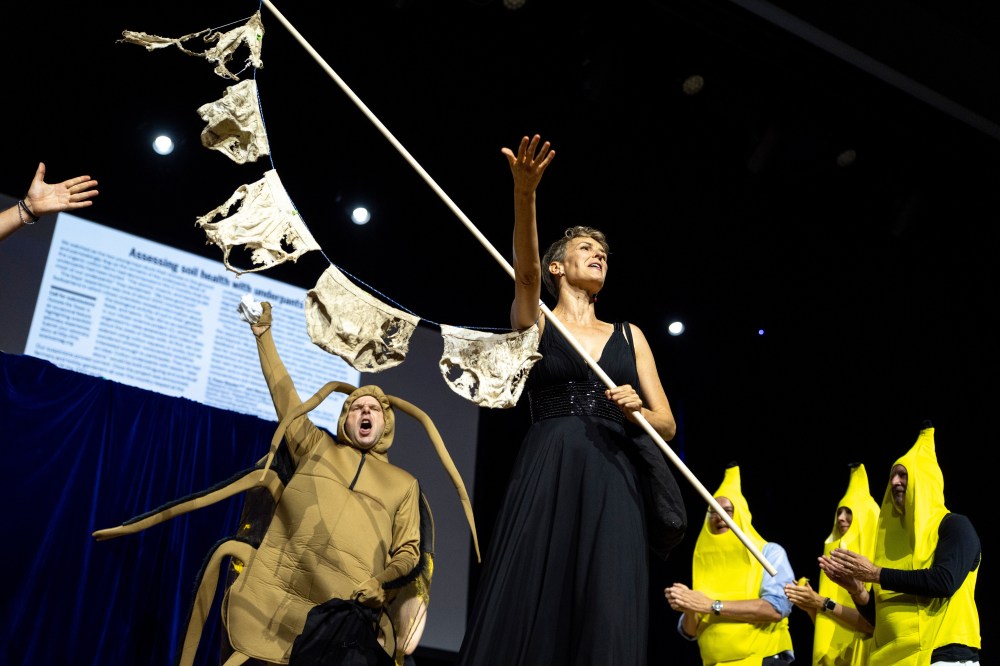
Another research team buried 1,000 pairs of underwear in more than 25 countries to study how critters in the soil helped them decompose.
As per tradition, audience members fashioned paper airplanes and hurled them toward the stage to kick off the show.
For future ceremonies, organizers plan to alternate between Zurich and other European countries. The 2027 ceremony will be held in the Belgian city of Antwerp. Previous iterations took place at Harvard University, the Massachusetts Institute of Technology and Boston University, but there are no immediate plans to return to the U.S.
“During the past year, it has become unsafe for our guests to visit the country,” Marc Abrahams, master of ceremonies and editor of the magazine, told The Associated Press in an email in March.

The Nobel Prizes, which have no relation to their cheekily named counterpart, will be announced at the start of October.
___
Associated Press reporter Michael Casey contributed to this report.
___
The Associated Press’ health and science coverage receives financial support from the AP Fund for Journalism and private foundations. AP is solely responsible for all content. Find AP’s standards for working with philanthropies, a list of supporters and funded coverage areas at AP.org.