Author says Trump’s ‘Lake America’ order driving hits to guide on ditching U.S. tech
Advertisement
Read this article for free:
or
Already have an account? Log in here »
To continue reading, please subscribe:

Digital Subscription
One year of digital access for only $205*
- Enjoy unlimited reading on winnipegfreepress.com
- Read the E-Edition, our digital replica newspaper
- Access News Break, our award-winning app
- Play interactive puzzles
*First annual payment billed as $205.00 + GST for one year. This annual subscription will automatically renew at $233.00 + GST every 52 weeks (10% off the regular annual price of $259.35). Offer available to new and qualified returning subscribers only. Cancel any time.
To continue reading, please subscribe:
Add Free Press access to your Brandon Sun subscription for only an additional
$1 for the first 4 weeks*
- Enjoy unlimited reading on winnipegfreepress.com
- Read the E-Edition, our digital replica newspaper
- Access News Break, our award-winning app
- Play interactive puzzles
*Your next Brandon Sun subscription payment will increase by $1.00 and you will be charged $17.95 plus GST for four weeks. After four weeks, your payment will increase to $24.95 plus GST every four weeks.
Read unlimited articles for free today:
or
Already have an account? Log in here »
FREDERICTON – Canadian author Paris Marx says there’s been a renewed interest in his list of alternatives to U.S. technology since President Donald Trump signed an order renaming Lake Ontario to “Lake America.”
Marx, who hosts the Tech Won’t Save Us podcast and is based in St. John’s, N.L., maintains a catalogue of email services, mobile phones and other tech created by firms outside the United States.
For example, he suggests Switzerland’s Proton for its email, cloud storage and password manager. There’s also a phone alternative he recommends called Fairphone that runs on an open-source European operating system and was made in the Netherlands.
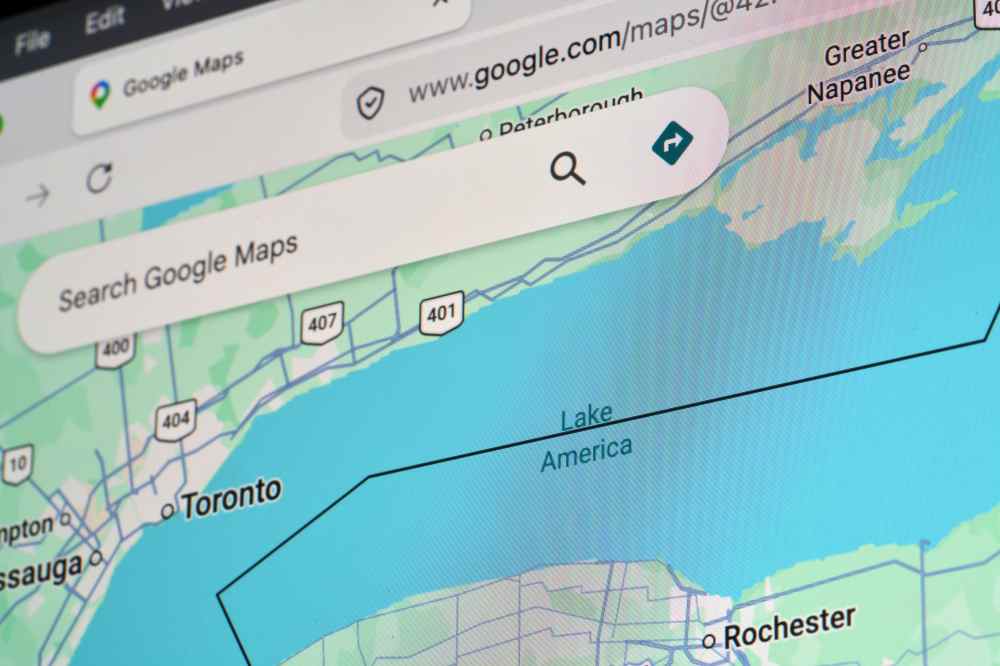
And, of relevance, Marx offers map alternatives in his “Getting off US tech” guide, such as Estonia’s Organic Maps, OpenStreetMap out of the United Kingdom and the Dutch-made Here WeGo.
He says that more Canadians are checking it out after Google updated its maps application showing its U.S. users Trump’s new name for Lake Ontario.
Google says users in Canada will still see it displayed as Lake Ontario on Google Maps, while people elsewhere in the world will see both names.
Trump has also contacted Apple directly to pressure the tech giant to change Lake Ontario’s name on its maps service, U.S. Interior Secretary Doug Burgum said.
Marx said Monday the Trump’s administration’s unilateral ability to change a digital map shows how important it is for Ottawa to prioritize Canadian control over critical technology and infrastructure — otherwise known as digital sovereignty.
“Many of our governments today would be very dependent on services from U.S. tech companies,” he said in an interview Monday.
Canada may invest in its economy and military to protect its independence, but Marx said the country will still be vulnerable unless it also finds ways to move away from relying on the U.S.
Emily Osborne, a policy researcher at the Canadian Shield Institute think tank, said Canada is particularly exposed to America’s near monopoly of the cloud services and credit cards Canadians use.
“So much of the internet relies on cloud infrastructure in some way,” Osborne said Monday, speaking by phone from Hamilton, Ont.
“That’s an important choke point where American private firms have way more control than I think we should be comfortable with.”
Amazon, Microsoft and Google hold 85 per cent of public cloud market share in Canada, according to a June report from Canadian Anti-Monopoly Project.
The report warned Canada’s dependence on the three “hyperscalers” — firms that have the ability to provide computing resources on-demand globally — created “a sovereign risk as well as a competition problem.”
Marx said he sees a need for the Canadian government to get the ball rolling on technology alternatives in the same way it has invested taxpayer dollars to support Canadian companies in other sectors.
“Achieving a real degree of digital sovereignty … is inevitably going to involve a government effort,” he said, adding that building at home will also help build up Canada’s technology sector.
“It’s also about diverting all that money that goes outside of the country and maybe keeping a bit more of that inside.”
Osborne noted Canada wouldn’t be the first country to build domestic software for use on home soil.
France, for example, is actively replacing Windows, Microsoft Office and the Zoom video calling software used by its public service with a combination of French and open-source alternatives.
Both Marx and Osborne said digital sovereignty goes beyond the name of a place on a map and instead is about long-term transformation across all of Canada’s systems.
That means Canada needs to keep cutting its reliance on technology from the U.S. even after Trump’s time in office, Osborne added.
“This is sparking an important conversation about control and ownership in the digital realm,” Osborne said by phone.
“It’s something that extends far beyond Trump.”
This report by The Canadian Press was first published Aug. 31, 2026.