Coastal construction projects threaten the mangrove forest that protects Vietnam’s biggest city
Advertisement
Read this article for free:
or
Already have an account? Log in here »
To continue reading, please subscribe:
Digital Subscription
One year of digital access for only $1.44 a week*
- Enjoy unlimited reading on winnipegfreepress.com
- Read the E-Edition, our digital replica newspaper
- Access News Break, our award-winning app
- Play interactive puzzles
*Billed as $5.77 plus GST every four weeks. After 52 weeks, price increases to the regular rate of $19.95 plus GST every four weeks. Offer available to new and qualified returning subscribers only. Cancel any time.
To continue reading, please subscribe:
Add Free Press access to your Brandon Sun subscription for only an additional
$1 for the first 4 weeks*
- Enjoy unlimited reading on winnipegfreepress.com
- Read the E-Edition, our digital replica newspaper
- Access News Break, our award-winning app
- Play interactive puzzles
*Your next Brandon Sun subscription payment will increase by $1.00 and you will be charged $17.95 plus GST for four weeks. After four weeks, your payment will increase to $24.95 plus GST every four weeks.
Read unlimited articles for free today:
or
Already have an account? Log in here »
CAN GIO, Vietnam (AP) — Mangrove forests, a vital buffer between Vietnam’s Ho Chi Minh City and an increasingly volatile sea, are at risk as the country’s financial capital expands and construction reshapes its coastline.
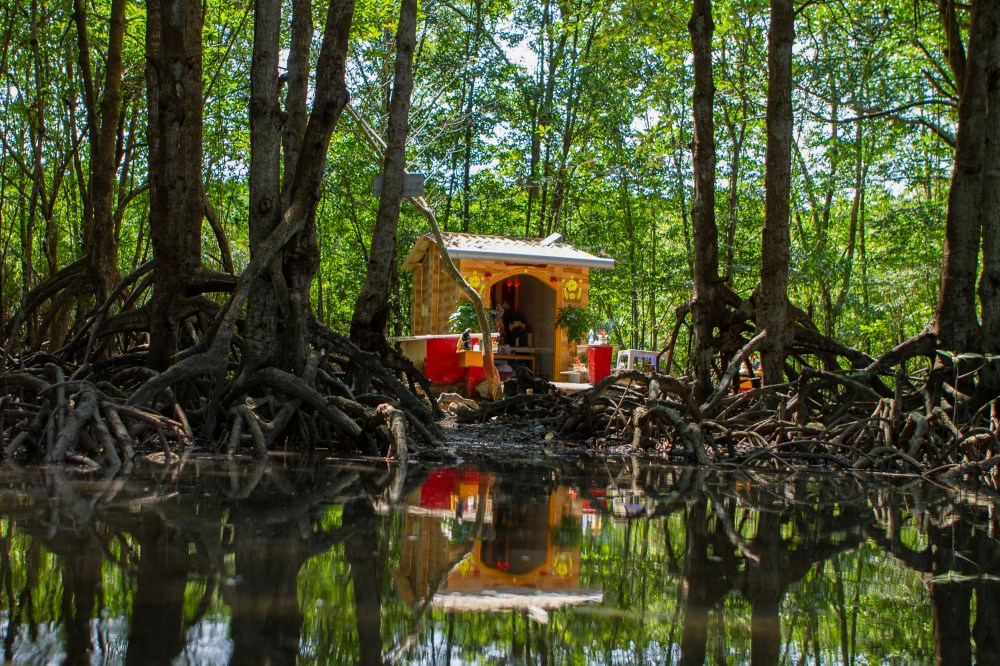
For generations, a dense tangle of mangrove trees has shielded the city as rising temperatures due to climate change intensified storms and flooding. Their roots knit the coastline together, sheltering marine life and fish and absorbing carbon emissions.
Scientists warn that construction of Can Gio, a new seaside city, along with a major port, roads, bridges and a 14-km (9-mile) sea-crossing route between Can Gio and the port city of Vung Tau, could disrupt water flows that sustain the mangroves, weakening a natural defense for the city of 10 million.
Ho Chi Minh City, formerly known as Saigon, is one of the world’s most climate-vulnerable cities. About 80% of its area is vulnerable to flooding, a 2026 study by Vietnamese scientists found. Even now, the government estimates that rising seawater costs the city about $57 million a year. In 2025, record downpours and the highest tides in its history flooded streets and homes.
The mangroves in Can Gio nearly died out during the Vietnam War, when U.S. forces sprayed chemicals to strip away cover for Viet Cong guerilla fighters. In the late 1970s, the forest was painstakingly replanted. It became Vietnam’s first UNESCO biosphere reserve in 2000.
Ho Chi Minh city is catching up with Vietnam’s economic boom
As Vietnam pushes to become Asia’s next tiger economy, it is transforming its 3,260 kilometer (2,030 mile) coastline. In April, the country’s largest company, Vingroup, broke ground for the new coastal town on reclaimed land the size of 1,800 soccer fields.
Authorities view Can Gio as a “gateway to the sea” and vital logistics hub. Its new $4.7 billion port will handle millions of shipping containers a year. It’s also slated to become a major tourism destination.
At the heart of those plans is Vingroup’s Green Paradise — a 2,870-hectare (more than 7,000 acre) coastal development the conglomerate’s property arm, Vinhomes, is building. It will include housing, shopping and entertainment areas.
Along with the crossing to Vung Tau, Vingroup is working on a metro line connecting Can Gio to Ho Chi Minh City and roads that will link to the city’s expressway network.
Construction brings growing pains to Can Gio
Life in the fishing town of Can Gio has long followed the tides and seasons. Legends tell of whales that saved imperiled fishing boats. Small shrines devoted to local deities dot the forest.
Residents are divided. Many rely on fishing, and the construction has pushed fish into deeper waters beyond the reach of their small boats. over livelihoods tied to the mangroves. Now fisher folk look on as concrete seawalls and embankments steadily enclose reclaimed land. Massive pipes and bulldozers line the beach.
But many younger people now work for Vingroup. Some hope the projects will bring more jobs, while others complain they received scant compensation for land now being marketed for far more.
Muoi, who gave only one name for fear of reprisals by authorities, gave up fishing and now helps his wife in her shop.
Blocked drainage has worsened floods and polluted the water, killing oysters and wiping out farms, Muoi said.
Can Gio was once “magical,” he said. “That doesn’t exist anymore. They have boarded everything up.”
The mangrove forests are under threat
The mangrove forest’s mature trees and carbon-rich soils store earth warming greenhouse gases, said Marie Arnaud, a researcher at the French Sustainable Development Institute based at the Sorbonne University in Paris.
“Can Gio is quite important to Vietnam,” she said, citing the project’s huge scale as a concern.
Apart from disruptions to water flows, increased pollution will add to pressures on the ecosystem, she said.
“There are examples of mangroves that have disappeared because of hydrological barriers like roads and bridges,” she said.
In Colombia’s Ciénaga Grande, roads and dikes disrupted the flow of seawater and freshwater from the 1950s onward, contributing to one of the largest mangrove die-offs on record.
Globally, a net 284,000 hectares (702,000 acres) of mangrove forest was lost between 2000 and 2020, according to the U.N. Food and Agriculture Organization. In Vietnam, planting of new mangroves has helped, but that progress has been undermined by losses due to aquaculture, land conversion and coastal erosion.
Vietnamese officials have emphasized that the project is outside Can Gio’s core, more strictly-protected area.
In September, Ho Chi Minh City authorities asked for approval to clear 4.57 hectares (11.3 acres) of mangrove forest in the buffer zone of the Can Gio Mangrove Biosphere Reserve for the metro link to Can Gio, state media said.
Trying to allay other concerns, officials say sand for concrete used in the construction will come from an artificial lake, not the Mekong river, where sand mining has worsened riverbank erosion and altered its stream.
The project highlights competing priorities
Forests may occasionally have to be sacrificed for economic development, said Tuan Vo of Can Tho University, but the damage should be minimized by consulting experts and understanding how changes could affect river flows.
“Nobody wants to cut the forest. But, for the economy, I think that sometimes we have to give something up,” he said.
The Vietnamese government didn’t response to queries from the AP. In 2020, it told state media that the project complied with Vietnamese law and UNESCO rules.
The U.N. agency didn’t respond to questions about whether it had reviewed the project but told The Associated Press in an email that it was monitoring it and working with the Vietnamese government and other stakeholders.
Vingroup’s growth drive is pushing it toward riskier projects
Apart from the environmental risks, the Can Gio project may be a financial gamble, said Le Hong Hiep of the ISEAS–Yusof Ishak Institute in Singapore.
Vinhomes has mostly built projects near big cities that can be sold quickly. The Can Gio project requires costly land reclamation and extensive new infrastructure before people can move in.
But as demand for high-end property slows in Vietnam, Vinhomes has little choice but to keep building, said Hiep. Vingroup, its parent company, relies on revenue from Vinhomes for cash needed to fund other operations such as its automaker Vinfast’s electric vehicle manufacturing.
“They need new projects to borrow from banks, to record new revenues and new profits, to boost their share performance on the stock market. And they cannot stop,” Hiep said.
Vingroup didn’t respond to requests for comment from the AP.
The conglomerate is also building a $16 billion, 6,200-hectare (15,320-acre) urban project near iconic Ha Long Bay and has, so far, received government approvals to sell about 7,000 under-construction homes in Ha Long, state media said.
“The risk is building up very fast,” Hiep said.
___
The Associated Press’ climate and environmental coverage receives financial support from multiple private foundations. The AP is solely responsible for all content. Find AP’s standards for working with philanthropies, a list of supporters and funded coverage areas at AP.org.