Peru faces human rights court over protections for isolated Indigenous peoples in Amazon

Advertisement

Advertise with us

PARAMARIBO, Suriname (AP) — Peru faced the final day of a landmark hearing before a regional human rights court Friday over allegations that it failed to protect Indigenous peoples living in isolation in the Amazon from logging and other activities encroaching on their territory.

Read this article for free:


or

Already have an account? Log in here »

To continue reading, please subscribe:

Subscribe and receive a limited-edition Free Press branded hat or tote.

Digital Subscription

One year of digital access for only $205*

  • Enjoy unlimited reading on winnipegfreepress.com
  • Read the E-Edition, our digital replica newspaper
  • Access News Break, our award-winning app
  • Play interactive puzzles

*First annual payment billed as $205.00 + GST for one year. This annual subscription will automatically renew at $233.00 + GST every 52 weeks (10% off the regular annual price of $259.35). Offer available to new and qualified returning subscribers only. Cancel any time.

To continue reading, please subscribe:

Add Free Press access to your Brandon Sun subscription for only an additional

$1 for the first 4 weeks*

  • Enjoy unlimited reading on winnipegfreepress.com
  • Read the E-Edition, our digital replica newspaper
  • Access News Break, our award-winning app
  • Play interactive puzzles
Start now

*Your next Brandon Sun subscription payment will increase by $1.00 and you will be charged $17.95 plus GST for four weeks. After four weeks, your payment will increase to $24.95 plus GST every four weeks.

PARAMARIBO, Suriname (AP) — Peru faced the final day of a landmark hearing before a regional human rights court Friday over allegations that it failed to protect Indigenous peoples living in isolation in the Amazon from logging and other activities encroaching on their territory.

The two-day hearing before the Inter-American Court of Human Rights in Montevideo, Uruguay, marks the first time the tribunal has considered a case involving Indigenous peoples living in isolation in Peru.

The case centers on the Mashco Piro, Yora and Amahuaca peoples, who live in remote areas of the Peruvian Amazon. Indigenous organizations say logging concessions and other incursions have pushed outsiders deeper into forests used by the groups, increasing the risk of violent encounters and exposure to diseases to which isolated peoples may have little immunity.
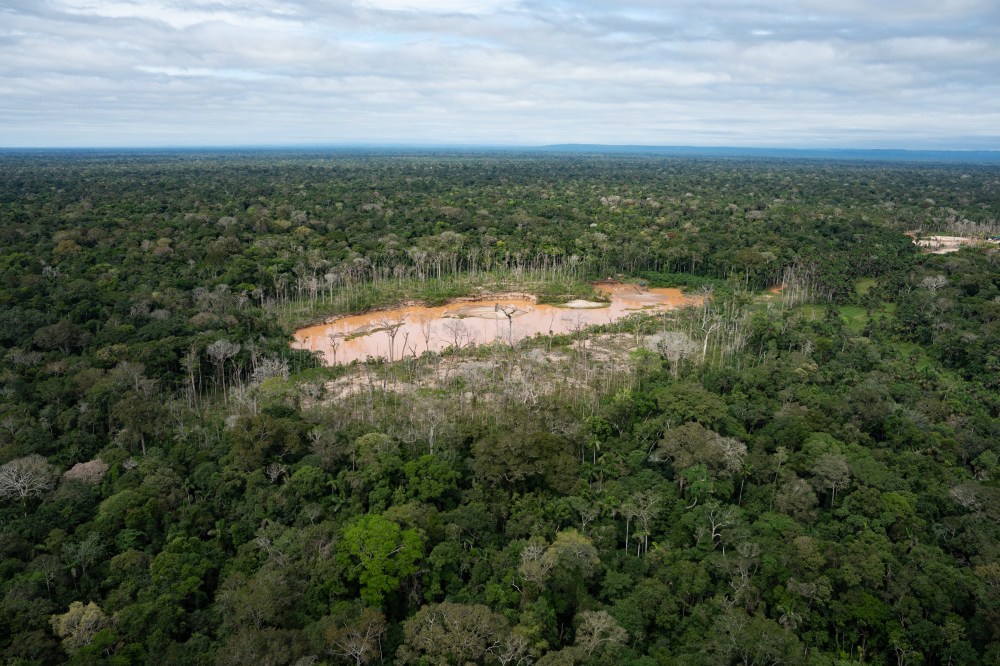
FILE - Deforestation from illegal mining is visible in the Tambopata National Reserve in Puerto Maldonado, Peru, Aug. 11, 2026. (AP Photo/Guadalupe Pardo, File)

“Many of our brothers and sisters have already disappeared, and we don’t want the Mashco Piro to suffer the same fate,” Maglin Alvarado Vargas, a leader of the Yine Indigenous people from the Native Community of Monte Salvado, told the court. “It is in your hands whether they can survive.”

Peru has argued that it has adopted laws, protocols, monitoring systems and other measures to protect isolated Indigenous peoples. The Peruvian government did not immediately respond to a request for comment.

But Julio Cusurichi, part of the Native Federation of the Madre de Dios River and Tributaries, known by its Spanish acronym FENAMAD, said those protections were not being implemented in practice.

“The government is not taking action to safeguard the rights of these peoples,” Cusurichi said. He warned that continued incursions into their territory could threaten their survival.

The case dates back decades. FENAMAD has raised concerns about logging in Mashco Piro territory since the 1990s and sought emergency protection from the Inter-American Commission on Human Rights in 2005. The commission, a separate body from the court, granted protective measures in 2007.

FENAMAD brought a formal petition to the commission in 2011. In 2022, the commission found Peru responsible for violating the rights of the Mashco Piro, Yora and Amahuaca. The case was sent to the court in 2024 after the commission concluded Peru had not complied with its recommendations.

Teresa Mayo of Survival International, an Indigenous rights organization supporting the case, said Indigenous communities and their allies want the court to hold Peru responsible and require stronger protection of the Mashco Piro’s territory and their right to remain isolated.

“This is a historic hearing,” Mayo said, adding that the groups want the court to guarantee the Mashco Piro can “remain uncontacted, with their land fully protected.”

At the center of the dispute is the territory available to isolated peoples and whether extractive activities can be permitted there.

Maritza Quispe, a lawyer with Peru’s Legal Defense Institute representing the Indigenous side, said the case could establish an important precedent over the ancestral land rights of peoples living in isolation and whether governments can authorize extraction in their territories.

Peruvian law generally bars outside activity in reserves established for isolated Indigenous peoples, but contains an exception allowing natural resources to be exploited when authorities determine there is a public necessity, Quispe said.

One of the lawyers representing the Indigenous groups told the court that Peru had “flagrantly violated” principles intended to protect isolated peoples, including avoiding contact with them and keeping their territories free from outside activity.

The Mashco Piro number more than 750 people and live in southeastern Peru and across the border in Brazil, according to Indigenous organizations. Encounters with outsiders have already turned deadly. In 2024, two loggers were killed in bow-and-arrow attacks after entering Mashco Piro territory, and subsequent sightings have placed members of the group close to active logging areas.

Contact also poses a potentially deadly risk to the Mashco Piro themselves. Indigenous peoples who have lived in isolation have little immunity to common illnesses brought by outsiders, meaning even diseases such as a cold or flu could kill them.

The parties now have until Oct. 26 to submit their final written arguments. The court will then deliberate and issue a judgment, though no date has been set for a ruling.

___

The Associated Press’ climate and environmental coverage receives financial support from multiple private foundations. AP is solely responsible for all content. Find AP’s standards for working with philanthropies, a list of supporters and funded coverage areas at AP.org.
Report Error Submit a Tip

More Stories

Peru faces human rights court over protections for isolated Indigenous peoples in Amazon

Steven Grattan, The Associated Press 4 minute read Preview

Peru faces human rights court over protections for isolated Indigenous peoples in Amazon

Steven Grattan, The Associated Press 4 minute read Friday, Sep. 25, 2026

PARAMARIBO, Suriname (AP) — Peru faced the final day of a landmark hearing before a regional human rights court Friday over allegations that it failed to protect Indigenous peoples living in isolation in the Amazon from logging and other activities encroaching on their territory.

The two-day hearing before the Inter-American Court of Human Rights in Montevideo, Uruguay, marks the first time the tribunal has considered a case involving Indigenous peoples living in isolation in Peru.

The case centers on the Mashco Piro, Yora and Amahuaca peoples, who live in remote areas of the Peruvian Amazon. Indigenous organizations say logging concessions and other incursions have pushed outsiders deeper into forests used by the groups, increasing the risk of violent encounters and exposure to diseases to which isolated peoples may have little immunity.

“Many of our brothers and sisters have already disappeared, and we don’t want the Mashco Piro to suffer the same fate,” Maglin Alvarado Vargas, a leader of the Yine Indigenous people from the Native Community of Monte Salvado, told the court. “It is in your hands whether they can survive."

Read
Friday, Sep. 25, 2026

Retiree sues neighbour over alleged dog attack

Scott Billeck 2 minute read 2:00 AM CDT

A Winnipeg man is suing his neighbour over an alleged dog attack he says occurred while he was helping him with a lawnmower.

Arthur Cabel, a retiree who lives on Selkirk Avenue, is seeking unspecified damages from neighbour Saisamone Saegone, according to a statement of claim filed in the Manitoba Court of King’s Bench last week.

Cabel claims he went to Saegone’s home in the afternoon on Sept. 23, 2024, to help him with his lawnmower.

According to the lawsuit, Saegone’s large dog, initially in a fenced backyard, escaped, approaching Cabel and “mauling, attacking and biting him.”

Perfumer battling city hall to keep his shop open

Gabrielle Piché 5 minute read Preview

Perfumer battling city hall to keep his shop open

Gabrielle Piché 5 minute read Yesterday at 5:45 PM CDT

Michael O’Malley has been here before — fighting the City of Winnipeg to keep his business open.

He usually spends his days concocting scents. He’s owned La Parfumerie, a Wolseley shop, since 1993.

Twenty-seven natural perfumes line shelves on 145 Evanson St.’s bottom floor. O’Malley lives above the space.

Now, he’s required to change the home’s zoning or shut out walk-in customers. Either would kill the company, O’Malley said.

Read
Yesterday at 5:45 PM CDT

Jets pick up netminder as relatively new 23-man roster announced

Mike McIntyre 7 minute read Preview

Jets pick up netminder as relatively new 23-man roster announced

Mike McIntyre 7 minute read Updated: Yesterday at 9:25 PM CDT

Let’s get the caveats out of the way: Nothing is set in stone, nor written in permanent ink, and what you see right now could change in the blink of an eye.

With that being said, allow us to introduce you to the 2026-27 Winnipeg Jets — where change is very much in the air.

The 23-man roster submitted to the NHL offices by Monday’s 4 p.m. deadline includes seven players who were not on the team at this time last year. In fact, there could be as many as 10 new faces in the opening-night lineup on Friday against Boston when you factor in three regulars didn’t start the 2025-26 campaign due to injury.

That’s a lot of turnover, which isn’t surprising for a team that finished 26th overall in the standings and was — to most fans and pundits — too old and too slow.

Read
Updated: Yesterday at 9:25 PM CDT

Wab Kinew as ‘communicator in chief’

Paul G. Thomas 6 minute read Preview

Wab Kinew as ‘communicator in chief’

Paul G. Thomas 6 minute read Yesterday at 2:00 AM CDT

Premier Wab Kinew and his party have been riding high in the polls longer than normal for a government one year or less away from its first re-election contest. One reason is his ubiquitous, dominating communications presence as NDP leader and premier.

The argument here is that Kinew has supplemented his prerogatives as premier and party leader (such as appointing cabinet ministers and approving party nominations) with the skilful use of communications to advance his policy agenda, boost his personal popularity and maintain the competitive advantage of his party over the opposition Progressive Conservatives.

Communications has always been a significant part of politics and policy making. However, in the contemporary political and media environments, communications considerations have moved from the background to the foreground of decision-making by political parties, including when they are performing in the role of government. Campaigning and governing now overlap in what has been described as a permanent election campaign.

Political parties use communications strategies for several purposes: to establish an image of the leader which makes a positive emotional connection with voters; to promote a coherent message and to keep party members on message; and to gain favourable media coverage for its policies and other actions on almost a daily basis.

Read
Yesterday at 2:00 AM CDT

The Brazilian election

Gwynne Dyer 5 minute read Preview

The Brazilian election

Gwynne Dyer 5 minute read 2:00 AM CDT

“Flávio Bolsonaro is Trump’s candidate and what Trump wants is to colonize Brazil, take our riches, steal our future and leave us in the dust,” claims the latest video released by President Luiz Inácio ‘Lula’ da Silva’s re-election campaign. The weird thing is about half of Brazil’s voters would be okay with Trump running the country (through Bolsonaro).

Read
2:00 AM CDT