Unveiling nature’s hidden beauty
Connection between art, science explored in U of M exhibit
Advertisement
Read this article for free:
or
Already have an account? Log in here »
To continue reading, please subscribe:
Digital Subscription
One year of digital access for only $1.44 a week*
- Enjoy unlimited reading on winnipegfreepress.com
- Read the E-Edition, our digital replica newspaper
- Access News Break, our award-winning app
- Play interactive puzzles
*Billed as $5.77 plus GST every four weeks. After 52 weeks, price increases to the regular rate of $19.95 plus GST every four weeks. Offer available to new and qualified returning subscribers only. Cancel any time.
To continue reading, please subscribe:
Add Free Press access to your Brandon Sun subscription for only an additional
$1 for the first 4 weeks*
- Enjoy unlimited reading on winnipegfreepress.com
- Read the E-Edition, our digital replica newspaper
- Access News Break, our award-winning app
- Play interactive puzzles
*Your next Brandon Sun subscription payment will increase by $1.00 and you will be charged $17.95 plus GST for four weeks. After four weeks, your payment will increase to $24.95 plus GST every four weeks.
Read unlimited articles for free today:
or
Already have an account? Log in here »
Hey there, time traveller!
This article was published 19/01/2019 (2830 days ago), so information in it may no longer be current.
A new exhibition at the University of Manitoba Archives & Special Collections explores the connections between art and science through the media of photography, printmaking, glass and books ranging from miniature to “mega formats.”
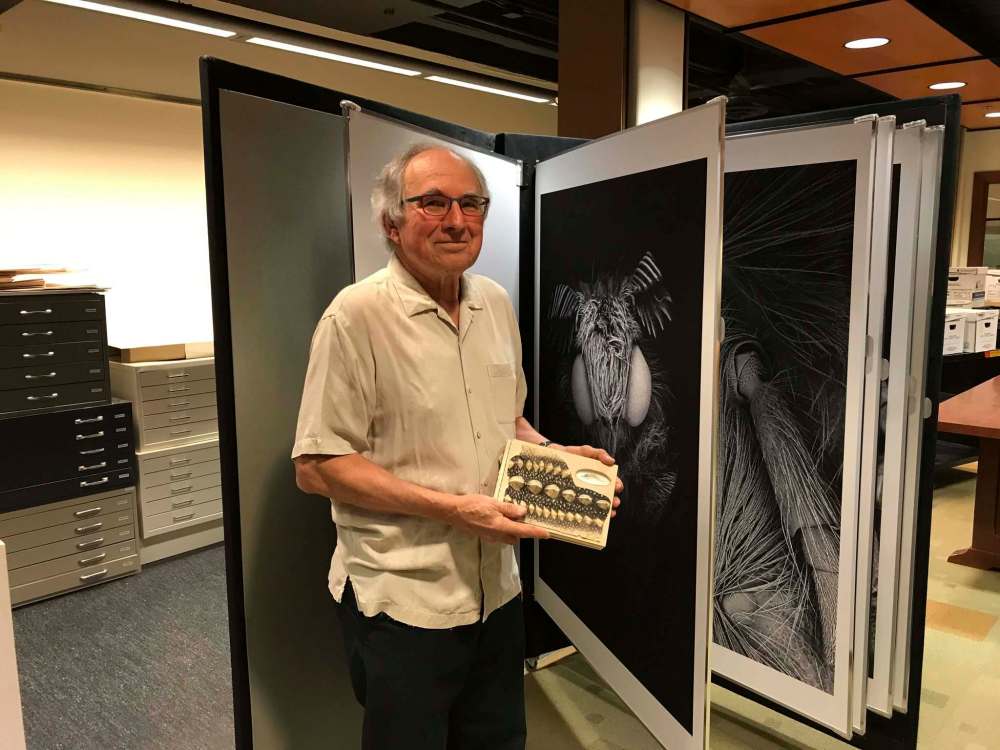
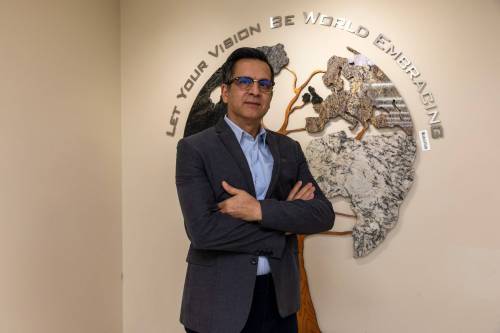
Erwin Huebner, who is the artist-in-residence at the U of M’s School of Art as well as a professor in the department of biological sciences, has unveiled Outside the Boundaries: Exploring the Natural World Through Artist Books, which will be on display at the Elizabeth Dafoe Library until April 15.
Huebner, 75, who is a cell biologist, says he is passionate about the hidden beauty inherent in the microscopic world and the impressive potential offered by the book as an art form.

“As a book and multimedia artist, I highlight the incredible micro-architecture of the biological world, the shapes, textures and patterns that evoke awe in a metaphysical plane above their inherent scientific content,” Huebner said. “These books intend to instil emotions, inquiry, wonderment and reawakening an appreciation of nature’s wonders. The imagery depends on interactions of natural materials with light, electrons, and one’s imagination.”
Huebner, who grew up in Edmonton, doesn’t have an easy answer about whether art or science came first for him. “I’ve been involved with art all my life,” he said. “My father was a master goldsmith and was chief designer for Henry Birks in Canada. He lived and worked in Edmonton. My mother was a craftsperson. Both my sisters and my brother have degrees in fine art. As a child, I did classes at the Edmonton Art Gallery.”
“But then, I always had a fascination for biology and chemistry. Then, when I started taking courses, I got hooked.”
“My artistic work is significantly influenced by my experience as a scientist doing research in cell biology and imagining.”
The work on display covers many aspects of the natural world. For example, Here to There and Back Again is a book focusing mainly on the annual migration of Arctic terns from the Arctic to the Antarctic.
“The record of the longest-living Arctic tern was a female that lived 31 years,” Huebner, who was head of the U of M’s department of zoology for 10 years, said. “She would have flown to the moon and back twice in her lifetime. I found this quite fascinating.
“A team of researchers in Greenland put trackers on Arctic terns. Then, they could actually map the flight. They don’t go in a straight line. It’s quite a circuitous route. So, I decided to incorporate some aspect of biology into the structure of the book.”

Here to There and Back Again is no ordinary scientific text, though. The book’s spine is a dried-up bird breastbone, which he found on a beach. After drilling holes into it, Huebner sewed the book’s pages to the spine.
“Where the ribs would have been attached, I put two wooden valves and attached the covers,” said Huebner, who included drawings of the Arctic terns’ bones and muscles in the book. “There’s also a map at the back of the bird’s migratory route.”
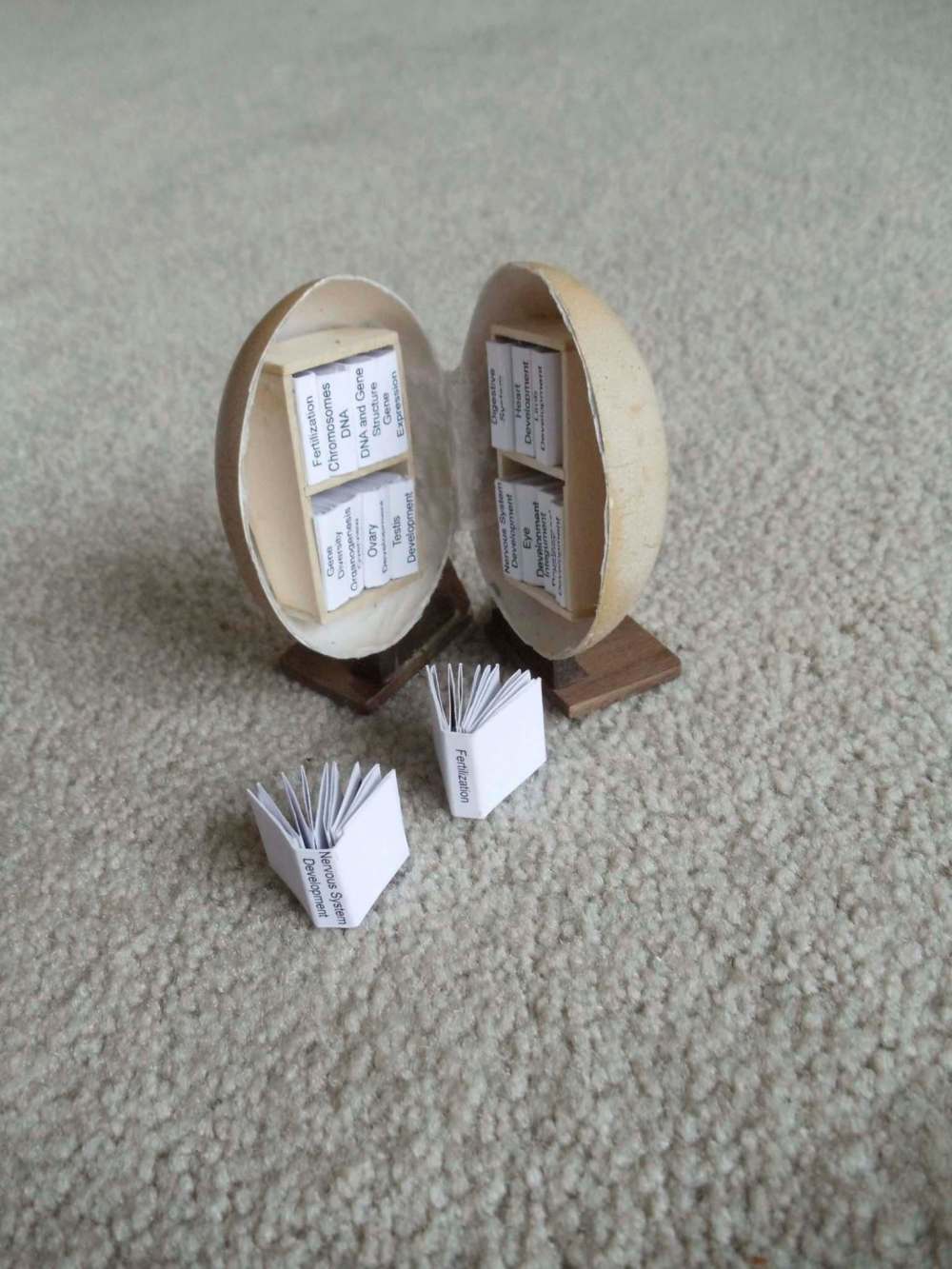
Other works in the exhibition include enlarged microscopic photographs of insects and a whimsical piece called Egg Library, which includes tiny books inside a split egg shell.
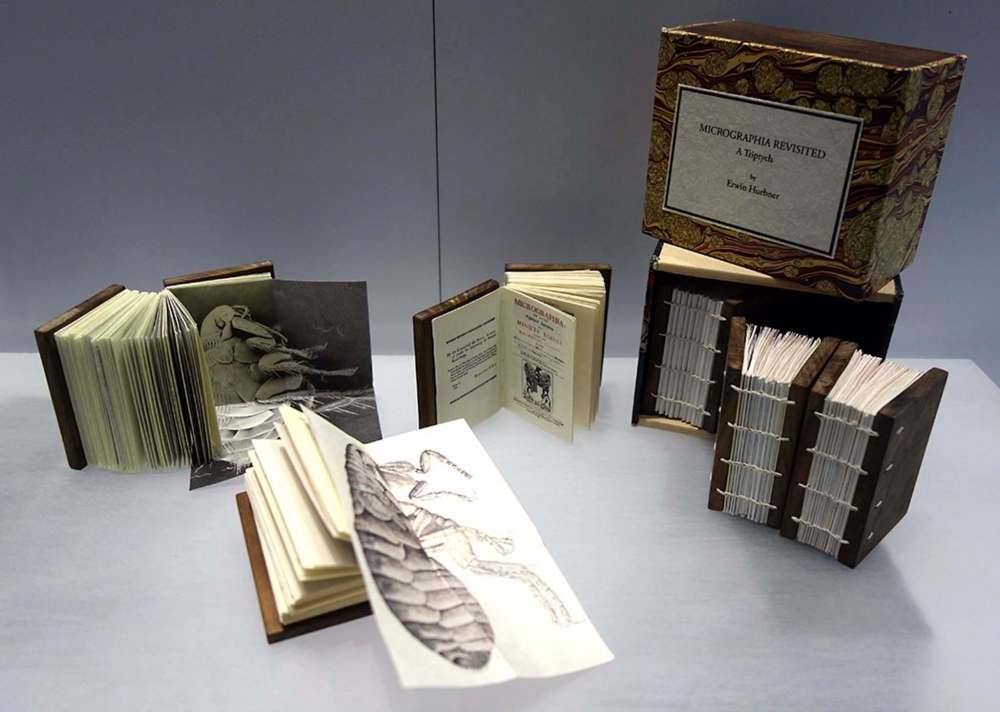
Shelley Sweeney, head of archives & special collections at U of M, says she included a few pieces of Huebner’s work in an earlier exhibition that had been proposed by Winnipeg book artists several years ago.
“When I saw his work, I was very impressed by it,” she said. “I had also seen some of his other work that he’d done for the School of Art. I said it would be an excellent thing if he could display his book art here. I just love his work. I think because of the tactile quality of it, and the creative message behind his pieces.”